
IDEALS OF FREEDOM: JEWISH IMMIGRATION, ARTS AND ADVOCACY IN AMERICA
Join us for a five-part speaker series celebrating the stories, creativity, and activism of Jewish immigrants who helped shape American life. Featuring engaging presentations by distinguished speakers, the series highlights journeys of resilience and the cultural contributions that continue to inspire communities today.
Black-Jewish Relations in the Country of Immigrants: Legacies Shared and Divided
Wednesday, January 14, 7:00 pm ET
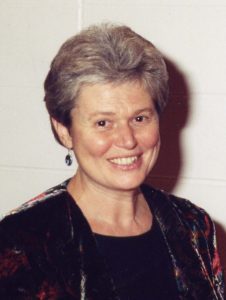
As a Jewish political refugee from the Soviet Union, Janna Kaplan understands the pain of discrimination and the agony of denied opportunities. As a career scientist, she studies data—the history and the present—and detects patterns and trends that offer some predictive insight into the future. Having married into an American Jewish family of Civil Rights leaders, she learned about the extraordinary power of a non-violent movement that united American Blacks and American Jews. Yet this powerful Black-Jewish alliance of the 1950s and 1960s, dedicated to the noble cause of equality, justice, and progress, eventually succumbed to challenges that continue to divide these communities today. The question remains: what can be done about it?
Janna Kaplan is Senior Research Scientist at Brandeis University specializing in Neuropsychology and Space Research. Janna’s late husband, Edward Kivie Kaplan (1942-2024), a Brandeis professor in the Humanities and Religious Studies, was the son of Kivie Kaplan (1904-1975), a Boston industrialist who was deeply involved in the Jewish social action and in the Civil Rights movements. Kivie Kaplan was elected National President of the NAACP in 1966 and served until his death in 1975. Session partners – Wyner Family Jewish Heritage Center at American Ancestors, Walnut Street Minyan of Newton, Massachusetts Antisemitism Synagogue Task Force (MAST), Orange County Jewish Community Scholar Program (CSP)
“Filthy, Un-American, and Often Dangerous:” Antisemitism and the Emergency Quota Act of 1921
Wednesday, March 4, 7:00 pm ET
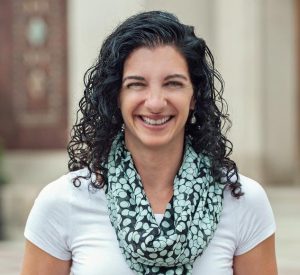
After the destruction of World War I, hundreds of thousands of European Jews sought to escape violence and poverty by emigrating to America. American consuls in Europe viewed these desperate Jews through a deeply antisemitic lens, fearing that they were radicals trying to enter and destroy the country with help from an international Jewish conspiracy. Acting on these fears, officials at the State Department worked with Congressional leaders to release reports that publicized the dangers of Jewish immigrants and ultimately led to the passage of the 1921 Emergency Quota Act. That legislation was instrumental in establishing the quota system that would keep desperate European Jews out of the country only a decade later, as they attempted to flee the Holocaust.
Kirsten Fermaglich is Professor of History and Jewish Studies at Michigan State University. Her most recent book, A Rosenberg by Any Other Name: A History of Jewish Name Changing in America (New York University Press, 2018) was awarded the Saul Viener Book Prize by the American Jewish Historical Society in June 2019. From January 2022 through June 2023, she served as a National Archives Distinguished Fellow, tasked with studying antisemitism in the United States federal government. Fermaglich is also the author of American Dreams and Nazi Nightmares: Early Holocaust Consciousness and Liberal America, 1957-1965 (Brandeis University Press, 2006) and the co-editor of the Norton Critical Edition of Betty Friedan, The Feminine Mystique (2013), with Lisa Fine. From 2016 through 2021, she was co-editor of the journal, American Jewish History, along with Daniel Soyer and Adam Mendelsohn. She currently serves on the board of the Association for Jewish Studies. Session partners – Wyner Family Jewish Heritage Center at American Ancestors, Massachusetts Antisemitism Synagogue Task Force (MAST), Orange County Jewish Community Scholar Program (CSP)
Russian American Jewish Refugee Woman Scientist: My Story in Space and Time
Wednesday, March 25, 7:00 pm ET
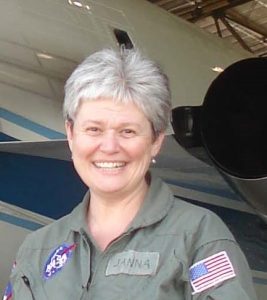
In 1981, Janna Kaplan arrived in the United States as a 27-year-old Jewish political refugee, fleeing the violent antisemitism and persecution of the Soviet Union. Having lived through and observed half a century of extraordinary history on both sides of the Iron Curtain, she will reflect on her 27 years in the Soviet Union and 45 years in America. Janna will share her at times hopeful yet often excruciating and agonizing insights into her personal, our national, and our common Jewish past, present, and future.
Janna Kaplan is Senior Research Scientist at Brandeis University, specializing in Neuropsychology and Space Research. At Brandeis since 1983, Janna studies human adaptation to various conditions of space flight such as weightlessness, high G, non-Earth planetary gravitational environments, artificial gravity, and space motion sickness. Of special interest are human factors onboard terrestrial, nautical and aeronautic vehicles. Janna’s undergraduate and graduate degrees are from the University of Leningrad (now, St. Petersburg). A former refusenik*, Janna came to the US from the Soviet Union (now, Russia) in 1982 at the age of 27 as a Jewish political refugee, fleeing state sponsored antisemitic violence and intellectual and cultural suppression. Session partners – Wyner Family Jewish Heritage Center at American Ancestors, Walnut Street Minyan of Newton, Massachusetts Antisemitism Synagogue Task Force (MAST), Orange County Jewish Community Scholar Program (CSP)
*Refuseniks in the Soviet Union were Jews who, because of state sponsored antisemitism, declared their desire to emigrate to Israel but were denied permission to leave by the state. Consequently, they were treated as enemies, deprived of jobs, sources of livelihood, and basic human rights. Severe persecutions affected adults and children alike. Refuseniks created a vibrant underground Jewish culture in Russia, in the late 1960s through 1980s, which included an elaborate system of Jewish education, religious education and practices, arts, literature, music, and community life. Most of the refuseniks were finally given permissions to emigrate in the early 1990s.
Immigrant Voices in Color: Murals and other Art from America’s Synagogues
Wednesday, May 13, 7:00 pm ET
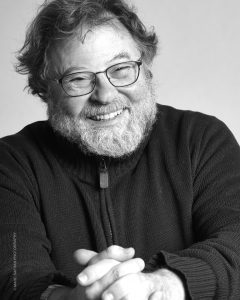
photo credit – Marc Safran
Join art and architectural historian Dr. Samuel D. Gruber for an illuminating journey through the vibrant art and design of America’s historic synagogues. This illustrated lecture explores how Jewish immigrants expressed their faith, identity, and aspirations in a new land through color, pattern, and imagery. Dr. Gruber will highlight the beautifully painted ceiling, pillars, and curtains of the Walnut Street Synagogue in Chelsea, one of the few surviving examples of the richly decorated immigrant-era sanctuaries that once flourished across the country. He will also present murals and artwork from other current and former synagogues, revealing how these sacred spaces became canvases for storytelling and memory. Through his engaging talk and striking visuals, Dr. Gruber will show how these works of art—created by and for immigrant congregations—continue to speak to us today, celebrating a legacy of creativity, resilience, and community that is central to the American Jewish experience.
Dr. Samuel D. Gruber has been a leader in the documentation, protection, and preservation of historic Jewish sites worldwide since 1988. He was founding director of the Jewish Heritage Program of World Monuments Fund (1988-1996) and Research Director of the U.S. Commission for the Preservation of America’s Heritage Abroad (1998 through 2008).He presently directs Gruber Heritage Global, a cultural resource consulting firm and is president of the not-for-profit International Survey of Jewish Monuments. He has taught as part-time faculty in Art History and Jewish Studies at Syracuse University (1994-2022) and at Binghamton, Colgate, Cornell, and Temple universities and Le Moyne College. Sam received his BA in Medieval Studies from Princeton University, his Ph.D. in Art and Architectural History from Columbia University and is a Fellow of the American Academy of Rome, where he won the prestigious Rome Prize in Art History. Sam writes and lectures about Jewish art and architecture. He is author of American Synagogues: A Century of Architecture and Jewish Community (2003), Synagogues (1999), and scores of reports, articles, and book chapters. Since 2008, he has written the blog Samuel Gruber’s Jewish Art and Monuments . He is a frequent invited speaker and consultant across the United States and in Europe. Session partners – Wyner Family Jewish Heritage Center at American Ancestors, Massachusetts Antisemitism Synagogue Task Force (MAST), Orange County Jewish Community Scholar Program (CSP)
From Synagogue to Museum: The Journey of a Jewish Immigrant Woodcarver and His Torah Arks
Wednesday, May 27, 7:00 pm ET (RESCHEDULED)
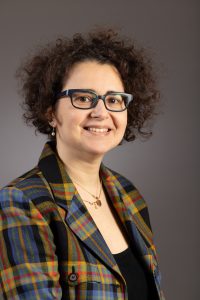
photo credit – Anne Ryan
Torah arks and furnishings by immigrant woodworker Sam Katz once graced numerous synagogues in New England and beyond. One of his largest surviving works remain in Chelsea’s Walnut Street Synagogue. Simona Di Nepi, Charles and Lynn Schusterman Curator of Judaica at the Museum of Fine Arts, Boston, will tell the behind-the-scenes stories of two works by this artist in the museum’s collection, from the acquisition of a mysterious gilded lion 65 years ago, to the recent display of a rescued Torah Ark from Chelsea and its transformation into the focus point of the MFA’s Judaica gallery. The presentation will also highlight other works by American Jewish immigrant artists represented in the gallery.
Simona Di Nepi is the Charles and Lynn Schusterman Curator of Judaica at the Museum of Fine Arts (MFA), Boston, where she is responsible for building and displaying the Judaica collection, and for curating ‘Intentional Beauty: Jewish Ritual Art from the Collection,’ the museum’s first Judaica gallery. Originally from Rome, before moving to the United States, Simona studied and worked in London and Tel Aviv for 25 years. She filled curatorial roles, in both decorative arts and Old Masters, at the Victoria and Albert Museum, The National Gallery and the Royal Academy of Arts in London, where she cared for permanent collections and curated exhibitions. In Israel, she worked as curator at Anu: The Museum of the Jewish People and as a Lecturer in Italian Renaissance Art at Reichman University, Herzliya. Simona curated the exhibitions and wrote the accompanying publications for “Reunions: Bringing Early Italians Paintings Back Together” (The National Gallery, London, 2005), and “Dreyfus: The Story of a French-Jewish Family” (Anu: the Museum of the Jewish People, Tel Aviv, 2014). She is also the author of the National Gallery’s collection catalogue From ‘Duccio to Leonardo: Renaissance Painting 1250-1500.’ In Judaica, Simona wrote the essays “Itinerant Sephardic Judaica: from Dutch Ports to the Harbours of Europe and the Americas,” “Jewish Things at the Museum of Fine Arts: a History,” “The Servi Shaddai: the Family History of an amulet at the MFA Boston,” and “Treasures from storage: Two Rediscovered Italian Jewish Textiles.” Simona is guiding Boston University students in the development of “Real and Imagined: Rembrandt and the Jews of the 17th-Century Dutch Republic,” an in-focus MFA exhibition that opens in December 2025. Session partners – Wyner Family Jewish Heritage Center at American Ancestors, Massachusetts Antisemitism Synagogue Task Force (MAST), Orange County Jewish Community Scholar Program (CSP)

Ideals of Freedom Speaker Series Flyer
SERIES PARTNERS


all programs in this series

January 14 and March 25 programs
GIVING OPPORTUNITIES AND SPONSORS